

Mental health is part of everyday life. It influences how we respond to pressure, manage emotions, maintain relationships and deal with unexpected changes. Yet, many people still think about mental health only when someone develops a serious psychological condition.
The reality is much broader. A person may continue working, studying and meeting family responsibilities while quietly struggling with anxiety, emotional exhaustion or persistent sadness. These experiences may not always be visible to others, but they can affect how a person feels and functions.
This is why the importance of mental health awareness goes beyond understanding mental illness. It helps us recognise emotional difficulties, question harmful assumptions and understand when support may be needed. It also encourages us to treat ourselves and others with greater patience and empathy.
In this article, we explore what mental health awareness means, why it matters in everyday life, how psychological difficulties may appear and what individuals, families and communities can do to create a more supportive environment.
Table of Contents
What Is Mental Health Awareness? Understanding What It Really Means
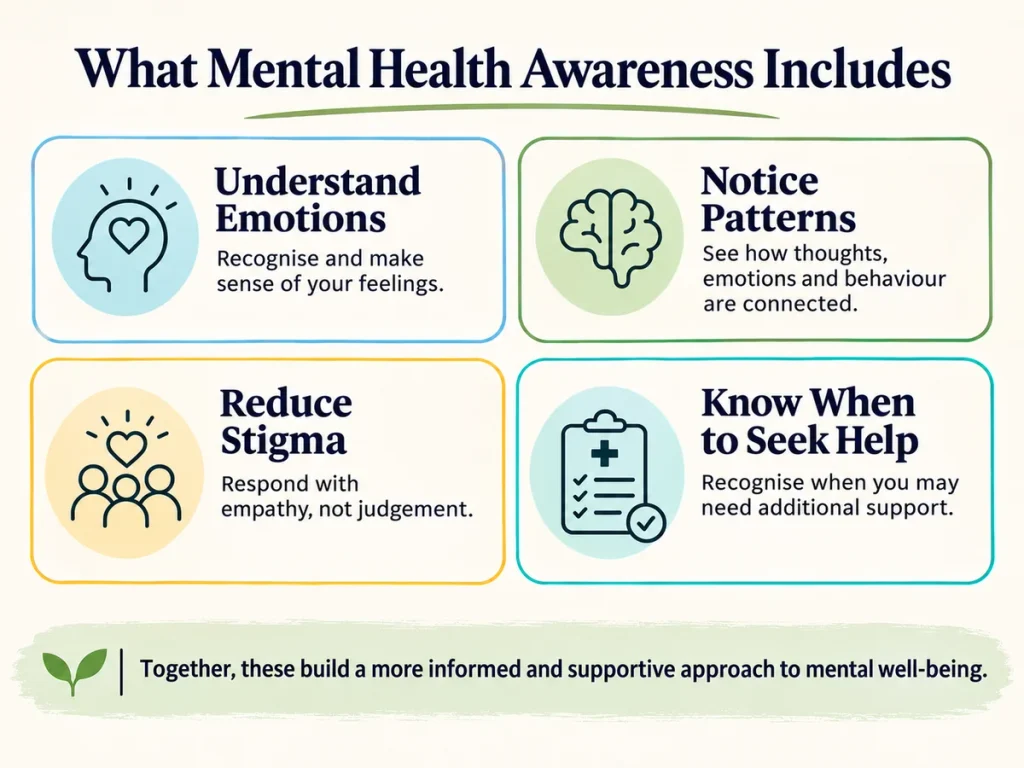
Mental health awareness means understanding the role of mental well-being in our lives and recognising that psychological difficulties deserve attention. It includes learning about emotions, thoughts, behaviour and common mental health conditions. It also means knowing when professional support may be helpful.
Awareness does not mean assuming that every change in mood is a mental health problem. It means becoming more informed before judging ourselves or someone else. Instead of immediately calling a person lazy, weak or difficult, we learn to consider what might be happening beneath the surface.
What Does Mental Health Awareness Actually Mean?
Mental health awareness begins with understanding our own emotional experiences. It helps us recognise feelings such as fear, sadness, anger, frustration and loneliness instead of ignoring them or reacting automatically. This awareness can make it easier to understand why certain situations affect us more strongly than others.
It also involves recognising that thoughts, emotions and behaviour are connected. Repeated worry, for example, may affect sleep and concentration, while a lack of sleep may make everyday challenges feel harder. Understanding these connections helps us respond more thoughtfully rather than blaming ourselves for every difficult reaction.
Awareness also means knowing that support is available. We may not always be able to manage emotional difficulties independently, and that is not a personal failure. Sometimes, speaking with a qualified professional is a sensible step towards understanding what is happening.
Is Mental Health Simply the Absence of Mental Illness?
No. Mental health is broader than the presence or absence of a diagnosed condition. The World Health Organization describes it as a state of mental well-being that helps people cope with life’s stresses, recognise their abilities, learn and work well, and contribute to their communities.
This means a person can experience psychological difficulties without having a diagnosed mental disorder. Someone may feel lonely, emotionally exhausted or overwhelmed while continuing to fulfil everyday responsibilities. Similarly, a person living with a mental health condition may still experience meaningful relationships, personal growth and periods of well-being.
Mental health also changes over time. Our circumstances, physical health, relationships, social environment and access to support can influence how we feel and function. The WHO therefore understands mental health as a continuum rather than a fixed state. Read the WHO explanation of mental health.
Mental Health Awareness and Mental Health Literacy: Are They the Same?
The two terms are related, but they have slightly different meanings. Mental health awareness is the broader understanding that mental well-being matters and that psychological difficulties should not be ignored. Mental health literacy focuses more specifically on the knowledge and beliefs that help people recognise mental health problems and respond appropriately.
The concept of mental health literacy was developed by Australian researcher Anthony Jorm and colleagues in their influential 1997 work. It includes recognising disorders, understanding risk factors and knowing about available help. It also involves knowing how to seek appropriate support.
For example, awareness may help someone understand that persistent anxiety deserves attention. Mental health literacy can help them identify reliable information, understand the role of different professionals and consider where to seek help. Both are important because knowing that mental health matters is only the beginning.
Why Is Mental Health Relevant to Everyone?
You do not need to have a mental health condition to benefit from psychological awareness. Parents need to understand children’s emotional development, students need to recognise when pressure is becoming difficult to manage, and employees need to understand how prolonged stress can affect them. These are ordinary life situations in which mental health knowledge can be useful.
It also matters in our relationships. Understanding emotions can help us communicate more clearly, listen without immediately judging and recognise when another person may need support. In this sense, mental health awareness is not limited to healthcare settings; it is relevant wherever people live, learn, work and interact.
Why Is Mental Health Awareness Important in Everyday Life?
Mental health difficulties do not always appear in obvious ways. Sometimes they show up as persistent worry, irritability, withdrawal or difficulty concentrating. Understanding these changes can help people respond earlier and avoid making assumptions about themselves or others.
Awareness is also useful when life is going reasonably well. It helps us communicate, make informed decisions and create environments in which people feel comfortable discussing emotional difficulties. Its value can be seen in several areas of everyday life.
It Helps People Recognise Psychological Difficulties Early
People sometimes wait until emotional distress becomes severe before considering support. They may believe that the problem will disappear on its own or that they should be able to manage everything independently. While some difficulties do pass with time, persistent distress deserves attention.
Consider someone who gradually stops meeting friends, struggles to sleep and finds it difficult to concentrate at work. These changes do not establish a diagnosis, but noticing them may encourage the person to reflect on what is happening. Early recognition creates an opportunity to seek guidance before difficulties become more disruptive.
It Improves Understanding of Emotions, Thoughts and Behaviour
Our emotional reactions are not always easy to understand. A small disagreement may leave someone upset for hours, while a simple mistake may lead to intense self-criticism. Without awareness, people may interpret these reactions as personal weaknesses.
Psychological understanding encourages us to look at the situation more carefully. We can ask what triggered the reaction, what we are feeling and whether our response is helping us. For a deeper explanation, read The Hidden Psychology of Overthinking, which explores how repetitive thinking can influence everyday experiences.
It Reduces Stigma, Shame and Self-Blame
People experiencing psychological difficulties may already be dealing with uncertainty or self-doubt. When others describe them as weak, oversensitive or incapable, the experience can become even harder. Fear of being judged may also prevent people from talking openly about what they are going through.
Mental health awareness challenges these assumptions. It helps us understand that psychological difficulties can involve biological, psychological, social and environmental influences. This does not remove personal responsibility, but it reminds us that blame and humiliation are not helpful responses to distress.
It Encourages Appropriate Professional Help-Seeking
Some people believe they should seek professional support only when they can no longer manage everyday life. Others worry that speaking to a mental health professional automatically means receiving medication or being diagnosed with a serious condition. These misconceptions can delay a useful conversation.
Professional support can be considered when distress persists, becomes difficult to manage or affects daily functioning. Different professionals offer different forms of assessment and care, so understanding their roles can help people make informed decisions. Asking for help is not a sign of weakness; it is a reasonable response when something needs attention.
It Improves Relationships and Emotional Communication
Mental health influences how we communicate, respond to disagreements and understand other people’s feelings. When we struggle to recognise our own emotions, we may withdraw, become defensive or react more strongly than we intended. This can create misunderstandings even when neither person wants conflict.
Awareness gives us an opportunity to communicate more clearly. Instead of saying, “You always make me angry,” someone might explain, “I felt hurt when that happened, and I would like us to talk about it.” Such communication does not remove every disagreement, but it can make difficult conversations more respectful.

It Helps Create Supportive Families, Schools and Workplaces
Mental health is influenced by the environments in which people live, study and work. A child who is constantly criticised may hesitate to express emotions, while a student facing bullying may gradually withdraw from school activities. An employee working under prolonged pressure may struggle with sleep, concentration or motivation.
These situations cannot always be understood by looking at the individual alone. Families, schools and workplaces also have a responsibility to create respectful and supportive environments. Open communication, reasonable expectations and access to appropriate help can make a meaningful difference.
It Supports Informed Decisions About Well-Being
The internet has made mental health information easier to access, but not everything presented as psychology is reliable. Social media may encourage people to diagnose themselves or others from a single behaviour, while some posts promise quick solutions to complex emotional difficulties. Such information can create confusion.
Mental health literacy helps people question exaggerated claims and look for credible sources. It also reminds us that general information cannot replace a personal assessment. Reliable knowledge makes it easier to decide when self-care may be useful and when professional guidance is more appropriate.
Why Do People Ignore or Misunderstand Mental Health Problems?
Knowing that mental health matters does not always make it easy to discuss. People may fear judgement, worry about family reactions or believe that emotional difficulties should remain private. Others may not recognise that their experiences deserve attention.
These barriers can influence whether someone speaks openly or seeks support. Understanding them is important because mental health awareness must address not only a lack of information but also the social conditions that make help-seeking difficult.
Social Stigma and Fear of Judgement
In some families and communities, mental health difficulties are still associated with weakness or instability. People may worry that others will treat them differently if they speak about anxiety, depression or counselling. They may also fear that a diagnosis could affect their personal or professional relationships.
As a result, some choose to hide their distress. Silence may protect them from immediate judgement, but it can also leave them without the support they need. Reducing stigma begins with treating psychological difficulties as legitimate health concerns rather than reasons for shame.
Why Emotional Struggles Are Sometimes Mistaken for Weakness
Many people grow up hearing messages such as “Be strong”, “Stop worrying” or “Other people have bigger problems”. These statements may be intended to encourage resilience, but they can also teach people to dismiss their emotions. Over time, a person may find it difficult to admit that something is troubling them.
There is a difference between resilience and emotional suppression. Resilience involves responding to difficulties and recovering with appropriate support, while suppression involves pushing feelings away without addressing them. Understanding this difference can help people become stronger without pretending that nothing affects them.
Family Expectations and Cultural Misconceptions
Family and cultural beliefs can influence how people understand psychological distress. In some settings, emotional difficulties may be explained only through personal weakness, lack of discipline or family reputation. People may also turn first to familiar informal sources of support because professional services are less known or accessible.
Personal beliefs and spiritual practices can provide comfort and meaning. The concern arises when they discourage someone from receiving appropriate assessment or care. A respectful approach makes room for cultural values while also recognising the importance of reliable mental health information.
Lack of Knowledge About Mental Health Professionals
Some people delay seeking support because they do not know whom to approach. They may confuse counselling with psychiatric treatment or assume that every mental health professional provides the same service. Others may believe that seeing a psychiatrist automatically means taking medication.
In reality, mental health care includes different forms of assessment, counselling, psychological intervention and medical treatment. The right option depends on the person’s needs and the professional’s qualifications and scope of practice. Understanding these differences can make the first step less confusing.
Financial and Accessibility Barriers
Awareness alone cannot solve every difficulty. In some areas, mental health professionals may be difficult to access, while the cost of private services, travel and time away from work can make support harder to obtain. A shortage of trained providers can create further delays.
India’s National Mental Health Survey 2015–16, conducted by NIMHANS, documented substantial treatment gaps and barriers to mental health care. These findings are important, but the survey data were collected in 2015–16 and should not be presented as a current measurement of the treatment gap. The wider lesson remains that improving awareness must go hand in hand with improving access to services.
Why People Sometimes Wait Until Distress Becomes Severe
A person may continue working, studying and looking after family responsibilities while struggling internally. Because they are still completing their daily tasks, they may believe that their difficulties are not serious enough to deserve attention. Some also compare their problems with other people’s experiences and minimise their own distress.
There is no need to judge someone for waiting. However, persistent emotional difficulties do not have to reach a crisis point before support becomes appropriate. Understanding this can help people seek guidance without feeling that they must first prove how much they are suffering.
What Are Some Common Mental Health Problems People Should Understand?
Mental health difficulties can affect mood, thinking, behaviour, relationships and everyday functioning. Some involve persistent fear or worry, while others affect motivation, emotional regulation or a person’s experience of reality. Understanding these differences helps reduce misconceptions.
The conditions below are not a checklist for self-diagnosis. Similar experiences can have different causes, and only an appropriately qualified professional can assess an individual’s situation. The WHO provides an overview of recognised mental disorders and their effects on daily life. Explore the WHO fact sheet on mental disorders.
Anxiety Disorders and Persistent Fear or Worry
Anxiety is a normal human response to uncertainty, perceived danger or pressure. It can help us prepare for an important event or respond to a possible threat. However, anxiety may become a problem when fear and worry are excessive, persistent or difficult to control.
Anxiety disorders include generalised anxiety disorder, panic disorder, social anxiety disorder and specific phobias. For example, someone with social anxiety may experience intense fear of being judged, while a person with generalised anxiety disorder may struggle to control worry across several areas of life. The concern is not whether someone ever feels anxious, but whether the pattern causes significant distress or interferes with daily activities.
Depression and Prolonged Emotional Difficulties
Depression is more than an ordinary period of sadness. It can involve persistent low mood or a loss of interest and pleasure, along with changes in sleep, energy, concentration, appetite or feelings of self-worth. These difficulties may affect work, relationships and everyday responsibilities.
Depression does not look exactly the same in everyone. Some people withdraw from activities, while others continue meeting their responsibilities despite considerable emotional distress. It should not be dismissed as laziness or a failure to think positively.
Stress-Related Problems and Burnout
Stress is a response to demands or situations that feel challenging. Short-term stress can sometimes help us prepare and respond, but prolonged pressure without enough opportunity for recovery may affect sleep, concentration and emotional well-being. People may begin to feel exhausted, irritable or unable to switch off.
Burnout is often discussed in connection with prolonged workplace stress. The WHO classifies burnout in ICD-11 as an occupational phenomenon, not a medical condition or mental disorder. This distinction matters because ordinary stress, workplace burnout and clinical mental health conditions are related but not interchangeable.
Trauma-Related Psychological Difficulties
Traumatic experiences can affect how people feel, think and respond to situations. Some may experience distressing memories, avoidance, heightened alertness or changes in their sense of safety. Reminders of an earlier experience can sometimes trigger strong emotional or physical reactions.
Post-traumatic stress disorder (PTSD) is a recognised trauma-related condition. However, not everyone who experiences a frightening or distressing event develops PTSD. People respond to difficult experiences in different ways, and professional assessment is important when symptoms persist or interfere with daily life.
Substance-Use Disorders
Substance-use disorders involve patterns of alcohol or drug use that lead to significant difficulties or impairment. A person may continue using a substance despite harmful effects on health, relationships, work or other responsibilities. They may also find it difficult to reduce or control their use.
These difficulties should not be understood only through moral judgement. Substance-use disorders can involve biological, psychological and social influences, and appropriate treatment may be needed. Compassion and professional support are more helpful than shame.
Other Mental Health Conditions Worth Knowing About
Mental health conditions also include bipolar disorder, obsessive-compulsive disorder (OCD), schizophrenia and other psychotic disorders, and eating disorders. Neurodevelopmental conditions such as ADHD and autism can also influence how people experience and navigate everyday life, although they are not all classified in the same way as mental disorders.
These conditions are different from one another and require different forms of assessment and support. Learning their names is not the same as understanding or diagnosing them. The purpose of awareness is to replace misconceptions with accurate information and encourage appropriate care.
How Can You Recognise When Someone May Be Struggling With Their Mental Health?
Mental health difficulties are not always easy to recognise. Some people speak openly about what they are experiencing, while others become quieter or continue their routines without telling anyone how difficult things have become. There is no single appearance or behaviour that identifies someone as struggling.
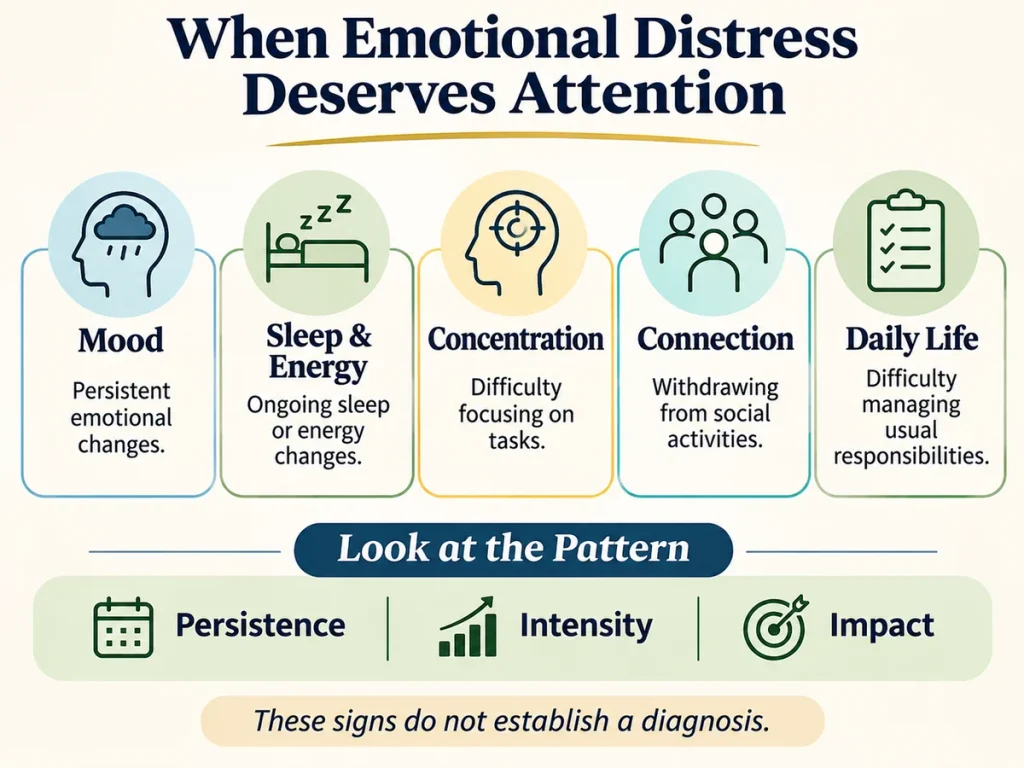
What matters is noticing changes from a person’s usual pattern, particularly when they persist or begin affecting everyday functioning. These changes do not prove that someone has a mental health condition, but they may be a reason to approach the person with care.
Changes in Mood and Emotional Responses
A person may become unusually irritable, tearful, anxious or emotionally withdrawn. They may react more strongly to situations that previously felt manageable or lose interest in activities they once enjoyed. Sometimes these changes are noticeable to others before the person feels ready to talk about them.
Mood changes can have many possible explanations, including stress, physical health problems, sleep difficulties and life circumstances. It is therefore important not to jump to conclusions. A gentle conversation may be more helpful than attaching a label to the person’s behaviour.
Changes in Sleep, Energy and Concentration
Psychological distress can sometimes affect ordinary routines. A person may struggle to fall asleep, wake frequently or feel tired despite having enough time to rest. They may also find it harder to concentrate, remember information or complete familiar tasks.
These changes are not specific to mental health conditions. Physical illness, medication and disrupted routines can also contribute. Looking at the wider picture helps avoid assuming that every change has a psychological cause.
Withdrawal From Social Activities and Relationships
Someone who is struggling may begin avoiding conversations, cancelling plans or spending more time alone. They may stop responding to messages or appear less interested in meeting people. A noticeable change from their usual pattern may deserve attention, especially when it occurs alongside other difficulties.
Enjoying solitude is not itself a sign of poor mental health. The concern is whether withdrawal is unwanted, persistent or connected with distress. A respectful question can help the person decide whether they would like to talk.
Changes in Everyday Functioning
One useful thing to notice is whether a person’s daily functioning has changed. They may find it increasingly difficult to manage responsibilities, attend classes, maintain personal routines or complete work they previously handled comfortably. Even when they continue performing these tasks, the effort involved may have increased considerably.
A change in functioning does not tell us exactly what is happening. It does, however, help us understand whether the difficulty is affecting the person’s life. This can be a useful reason to consider professional guidance.
Persistent Distress: Why Persistence, Intensity and Impact Matter
A difficult day does not necessarily indicate a mental health problem. Everyone experiences periods of worry, sadness, frustration and uncertainty. It becomes more important to pay attention when distress continues, feels difficult to manage or interferes with everyday life.
Three considerations can help us think about the situation: persistence, or how long the change has continued; intensity, or how strongly the person is affected; and impact, or whether it interferes with sleep, relationships, work, studies or ordinary responsibilities. These are reflection points, not a diagnostic test. If the difficulty is severe or safety is at risk, do not wait for it to continue for a particular length of time.
Why Mental Health Struggles Are Not Always Visible
A person may smile, attend meetings, complete assignments and appear socially active while privately experiencing emotional distress. Some people hide their feelings because they fear judgement, while others may not know how to explain what they are experiencing. Outward appearance alone cannot tell us how someone is feeling.
This is why it is better not to assume that someone is fine simply because they seem to be managing. A simple question such as, “You seem a little different lately. Would you like to talk?” can create space for an honest conversation. Listening without pressure is often a better starting point than trying to solve everything immediately.
Why Is Mental Health Awareness Important at Different Stages of Life?
Mental health needs can change as people grow, take on responsibilities and experience different life circumstances. The challenges faced by a teenager are not necessarily the same as those experienced by a working adult or an older person. Awareness helps families, educators and communities understand these differences.
It also reminds us that mental well-being deserves attention throughout life, not only during childhood or periods of crisis. Supportive relationships and appropriate services can make a difference at every age.
Mental Health Awareness Among Children and Teenagers
Childhood and adolescence are important periods of emotional, social and psychological development. Children are learning to understand feelings, manage frustration, form relationships and respond to changes around them. Their difficulties may appear through behaviour rather than direct conversation.
A child may become unusually quiet, struggle with school attendance, show changes in sleep or become more irritable. These behaviours can have several explanations, so it is important to understand the child’s circumstances rather than immediately labelling the behaviour. Parents and caregivers can help by creating an environment where children feel safe expressing emotions.
Why College Students Need Mental Health Awareness
College and university life often bring new responsibilities and changes. Students may be adjusting to living away from home, academic expectations, financial concerns, changing friendships and uncertainty about their future. Some may feel pressure to perform well while comparing themselves with classmates.
Mental health awareness can help students recognise when adjustment difficulties are becoming more disruptive. It also encourages educational institutions to provide accessible support and create environments where asking for help is not treated as a weakness. Support should be available without making students feel that they have failed.
Mental Health Awareness in Working Adults
Working adults often manage professional expectations, financial commitments, family responsibilities and workplace relationships at the same time. Some find it difficult to separate work from personal life, even after the working day ends. Prolonged pressure may affect their sleep, concentration, mood and relationships.
Mental health awareness encourages individuals and organisations to recognise these effects. It also reminds us that being productive does not mean a person is free from emotional difficulty. Workplaces can support well-being through reasonable expectations, respectful communication and appropriate access to help.
Why Parents and Caregivers Need Psychological Awareness
Parents and caregivers often focus so much on the needs of others that they overlook their own emotional well-being. Looking after children, supporting older family members and managing household responsibilities can be demanding, particularly when support is limited. Over time, the person providing care may become emotionally and physically exhausted.
Awareness helps caregivers recognise their own needs without feeling guilty about them. It also helps parents understand that children learn about emotions partly through the way adults respond to their own feelings. A caregiver who can acknowledge frustration, apologise after an angry reaction and seek support when needed offers a useful example of emotional responsibility.
Mental Health Awareness Among Older Adults
Older adulthood can bring changes such as retirement, bereavement, reduced mobility, changes in physical health and shifts in family roles. These experiences may affect emotional well-being, particularly when social contact becomes limited. Loneliness and isolation can also become concerns.
However, persistent sadness, withdrawal or changes in behaviour should not automatically be dismissed as a normal part of ageing. Physical health conditions, medication and cognitive changes may also influence mood and behaviour. A qualified professional can help explore these possibilities and identify suitable support.
How Can We Improve Mental Health Awareness in Everyday Life?
Mental health awareness does not have to begin with a formal campaign or a large programme. It can start with ordinary conversations, better listening and a willingness to understand emotional experiences without immediately judging them. Small changes in everyday behaviour can help create a more supportive environment.
However, awareness should lead to more than simply knowing the right words. It should help people communicate respectfully, recognise when support is needed and find reliable information.
Learn to Recognise and Name Emotional Experiences
Many people find it difficult to explain what they are feeling. They may say they are fine when they are actually disappointed, anxious, overwhelmed or lonely. Sometimes they simply do not have the words to describe the experience.
A useful starting point is to pause and ask, “What am I feeling right now?” You can also consider what happened before the feeling appeared and whether there is something you need but have not acknowledged. Naming an emotion does not make it disappear, but it can help you understand the experience more clearly.
Develop a Non-Judgemental Attitude Towards Mental Health
Avoid treating emotional difficulties as a character flaw. Instead of saying, “You are too sensitive,” consider asking what made the situation difficult for the person. Instead of telling someone to stop worrying, try understanding what they are worried about.
A non-judgemental attitude does not mean agreeing with everything someone says or does. It means treating their experience with dignity while maintaining reasonable boundaries. People are more likely to speak openly when they do not expect to be ridiculed or dismissed.
Listen When Someone Shares Emotional Difficulties
When someone begins talking about a difficult experience, our first instinct may be to offer advice. Sometimes advice is useful, but people often need to feel heard before they are ready to consider solutions. Listening gives them space to explain what has been happening in their own words.
Simple responses such as “That sounds difficult” or “Would you like to tell me more?” can help keep the conversation open. Try not to interrupt, compare their experience with someone else’s or promise that everything will be fine. You can offer support without taking responsibility for solving every problem.
Learn When Professional Help May Be Necessary
Friends and family can provide valuable emotional support, but they cannot replace professional assessment or treatment when these are needed. If someone’s distress is persistent, increasingly difficult to manage or affecting everyday functioning, encourage them to consider speaking with a qualified professional. Avoid pressuring them or making promises about what treatment will achieve.
You can offer practical help by finding reliable information or identifying available services. If the person is in immediate danger, the situation requires urgent support rather than an ordinary conversation. Knowing the limits of informal support is also part of mental health awareness.
Encourage Open Conversations at Home and Work
Mental health should not be discussed only when someone reaches a crisis point. Families can make room for conversations about stress, disappointment and emotional needs, while schools can help children learn how to recognise feelings and seek support. Workplaces can encourage respectful communication and take prolonged pressure seriously.
The aim is not to turn every conversation into a psychological discussion. It is to make it easier for people to speak honestly when something is troubling them. A supportive environment allows people to ask for help without feeling that they will automatically be judged.
Create Supportive Environments in Schools and Communities
Mental health is influenced by more than individual choices. Safe schools, supportive relationships, access to education, fair working conditions and strong community connections can all contribute to well-being. These conditions help people feel that they belong and have somewhere to turn when difficulties arise.
Communities can improve awareness through reliable information, accessible services and opportunities for people to seek support. Awareness programmes are most useful when they connect people with practical pathways to care. Information alone cannot remove barriers such as cost, distance or a shortage of professionals.
Learn to Distinguish Reliable Information From Misinformation
Online mental health content can be helpful, but not everything presented as psychology is supported by research. Be cautious about posts that diagnose people from a single behaviour, promise instant emotional healing or describe ordinary experiences as proof of a disorder. Such claims can create unnecessary fear or confusion.
Prefer information from recognised health organisations, qualified professionals and credible research publications. Remember that a general article cannot assess your personal circumstances. The purpose of mental health education is to improve understanding, not to encourage people to label themselves or others.
When Should Someone Seek Professional Mental Health Support?
Mental health awareness is valuable, but there are times when understanding needs to lead to action. People do not need to wait until they are unable to work, study or manage their responsibilities before seeking support. If emotional difficulties are persistent, distressing or becoming difficult to handle, speaking with a qualified professional may help.
There is no single rule that applies to every person or situation. The nature of the difficulty, its impact and any immediate safety concerns all matter.
When Emotional Difficulties Begin Affecting Everyday Life
Consider seeking support when emotional or psychological difficulties begin interfering with ordinary activities. This may include finding it increasingly difficult to work or study, withdrawing from important relationships, experiencing persistent changes in sleep or struggling to manage everyday responsibilities. A person may also lose interest in activities that once mattered to them.
These experiences do not automatically indicate a particular condition. However, they are reasonable reasons to consider a professional conversation. You do not need to wait until every area of life is affected.
When Distress Persists or Becomes Difficult to Manage
Some emotional reactions are temporary, while others continue despite changes in circumstances or attempts to manage them. If distress is lasting, becoming more intense or affecting several areas of life, a professional assessment may be useful. It can help clarify what is happening and what kind of support may be appropriate.
A two-week period is sometimes mentioned in general mental health guidance when discussing persistent symptoms, but it is not a rule that someone must wait to meet. Severe distress, rapidly worsening symptoms or immediate safety concerns deserve attention sooner. Do not delay urgent help because a particular time period has not passed.
Understanding the Roles of Counsellors, Psychologists and Psychiatrists
People sometimes delay seeking help because they are unsure which professional to approach. Although their roles may overlap in some settings, their training and responsibilities are not identical. It is sensible to check a professional’s qualifications, experience and scope of practice.
Counsellors provide structured support for emotional, personal, relationship or adjustment-related concerns within their qualifications and professional scope. Psychologists have academic and professional training in psychology, with areas of practice that vary according to their qualifications and specialisation. Clinical psychologists have specialised training in psychological assessment and clinical interventions; in India, people should check the relevant recognised qualifications and registration requirements with the Rehabilitation Council of India where applicable.
Psychiatrists are medical doctors who specialise in mental health. They can assess mental health conditions, provide medical treatment and prescribe medication when appropriate. The right starting point depends on the person’s concerns and the support available locally; a recognised health facility can help guide someone who is unsure.
Where Can You Find Mental Health Support in India?
India has several routes through which people can seek mental health support. The Government’s Tele-MANAS service provides free, confidential, round-the-clock mental health support by telephone. You can call 14416 or 1800-89-14416.
Mental health services may also be available through district hospitals, medical colleges and facilities connected with the District Mental Health Programme. Some primary healthcare facilities provide mental health support or referral services, although availability can vary by location.
If someone is in immediate danger, may act on thoughts of suicide or self-harm, or cannot remain safe, seek urgent help. In India, call 112 or go to the nearest emergency department. If it is safe to do so, stay with the person while help is being arranged.
Why Asking for Help Is Not a Sign of Weakness
Many people find it difficult to ask for help because they believe they should manage everything independently. They may worry about being judged or feel that their problems are not serious enough. These concerns are understandable, but they should not prevent someone from receiving appropriate support.
You do not need to have all the answers before speaking to a professional. You do not need to explain every feeling perfectly. Sometimes the first step is simply saying, “I have not been feeling like myself, and I think I need some help.” That conversation can be a meaningful beginning.
Conclusion: Mental Health Awareness Begins With Understanding
Mental health is part of how we live, work, learn, communicate and maintain relationships. It influences everyday experiences, even when we do not consciously think about it. Understanding this is at the heart of mental health awareness.
Awareness helps us recognise when something is changing, question harmful assumptions and respond to emotional difficulties with greater understanding. It also reminds us that mental well-being is not only an individual responsibility. Families, schools, workplaces, communities and healthcare systems all have a role in creating supportive environments.
We may not always know what another person is going through, and we may not have an immediate solution. But we can choose to listen, learn and avoid making someone’s struggle harder through careless judgement. Sometimes, a little understanding can make it easier for someone to speak about what they are experiencing and consider the support they need.
Mental health awareness does not mean having every answer. It means being willing to understand, recognise when support is needed and make room for people to seek it without shame.
Frequently Asked Questions About Mental Health Awareness
1. What are five reasons why mental health awareness is important?
Mental health awareness helps people recognise psychological difficulties, understand their emotional experiences and reduce stigma. It can encourage appropriate professional help-seeking and improve communication in relationships. It also supports healthier environments in families, schools and workplaces.
2. What are the five Cs of mental health awareness?
There is no universally accepted framework called the “Five Cs of Mental Health Awareness”. However, the Five Cs model is used in Positive Youth Development and refers to Competence, Confidence, Connection, Character and Caring. It describes areas of healthy youth development rather than a standard mental health awareness checklist.
3. What are some common mental health problems?
Common mental health conditions include anxiety disorders, depressive disorders, bipolar disorder, obsessive-compulsive disorder, trauma-related disorders, substance-use disorders and schizophrenia-spectrum disorders. Eating disorders are also recognised mental health conditions. Stress and burnout are widely discussed in relation to mental well-being, although burnout has a specific classification as an occupational phenomenon in ICD-11.
4. What habits can help improve mental health?
Regular sleep, physical activity, meaningful social connections and time for rest can support mental well-being. Recognising emotions, managing avoidable sources of stress and maintaining supportive relationships may also help. These habits are useful, but they do not replace professional care when someone needs it.
5. Is mental illness a choice?
No. Mental illness is not a personal choice or a sign of weak character. Mental health conditions can develop through a combination of biological, psychological and social influences, along with a person’s circumstances and experiences. People can make choices about seeking support and following appropriate care, but they should not be blamed for experiencing a mental health condition.
6. How can mental health awareness reduce stigma?
Awareness helps replace myths and assumptions with more accurate information. When people understand that psychological difficulties can affect individuals from different backgrounds and circumstances, they become less likely to describe them as weakness or personal failure. Open conversations, respectful language and accessible support can all help reduce stigma.
7. Why is mental health awareness important for students?
Students face academic expectations, changing relationships, family pressures and uncertainty about the future. Mental health awareness can help them recognise when stress is becoming disruptive and understand when to seek support. It also encourages schools and colleges to create safer environments where students can discuss concerns without unnecessary fear of judgement.
8. Can mental health awareness prevent mental illness?
Awareness alone cannot prevent every mental health condition, as many involve factors that individuals cannot control. However, better awareness can support prevention and early intervention by helping people recognise risk factors, build supportive relationships and access appropriate services. It is one part of a wider approach that also requires accessible healthcare and supportive communities.
A note for readers: This article is intended for psychoeducational purposes and mental health awareness. It offers general information and reflection, not a diagnosis, personalised counselling or treatment. If you are concerned about your mental health or someone else's, consider speaking with a qualified mental health professional.