

You may have started noticing it in small, everyday situations. A simple question turns into an argument. A minor mistake invites criticism. Even when nothing particularly wrong has happened, your partner seems irritated, dissatisfied or unhappy about something.
Perhaps you try to maintain a positive atmosphere, avoid unnecessary disagreements or find ways to make things better. Yet conversations keep returning to complaints, frustration or anger. Gradually, you may begin to feel emotionally tired, confused and unsure about how to respond.
Table of Contents
Living with a partner who is frequently angry or negative can be difficult, particularly when you cannot understand what triggers these reactions. You might find yourself wondering whether you are doing something wrong, whether your partner is unhappy with the relationship or whether this is simply the way they have always been.
Sometimes, the difficulty is not a single argument or an occasional bad mood. It is the repeated experience of dealing with irritation, criticism, pessimism and emotional tension. What initially seemed like a temporary phase may gradually become a familiar pattern in everyday life.
Why Is My Partner Always Angry and Negative?
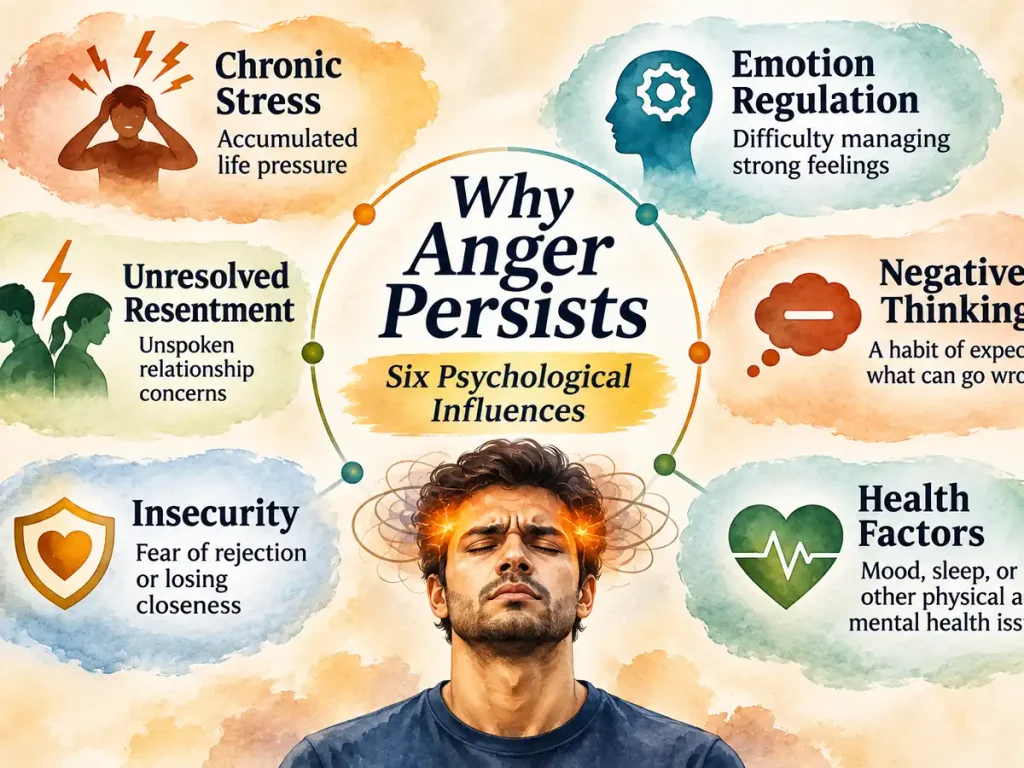
There is rarely one explanation for this behaviour. Persistent anger may be associated with accumulated stress, difficulties managing emotions, unresolved relationship concerns, negative thinking patterns or other psychological and physical factors.
Sometimes, what appears to be constant negativity may also reflect deeper dissatisfaction or an inability to communicate emotional needs constructively.
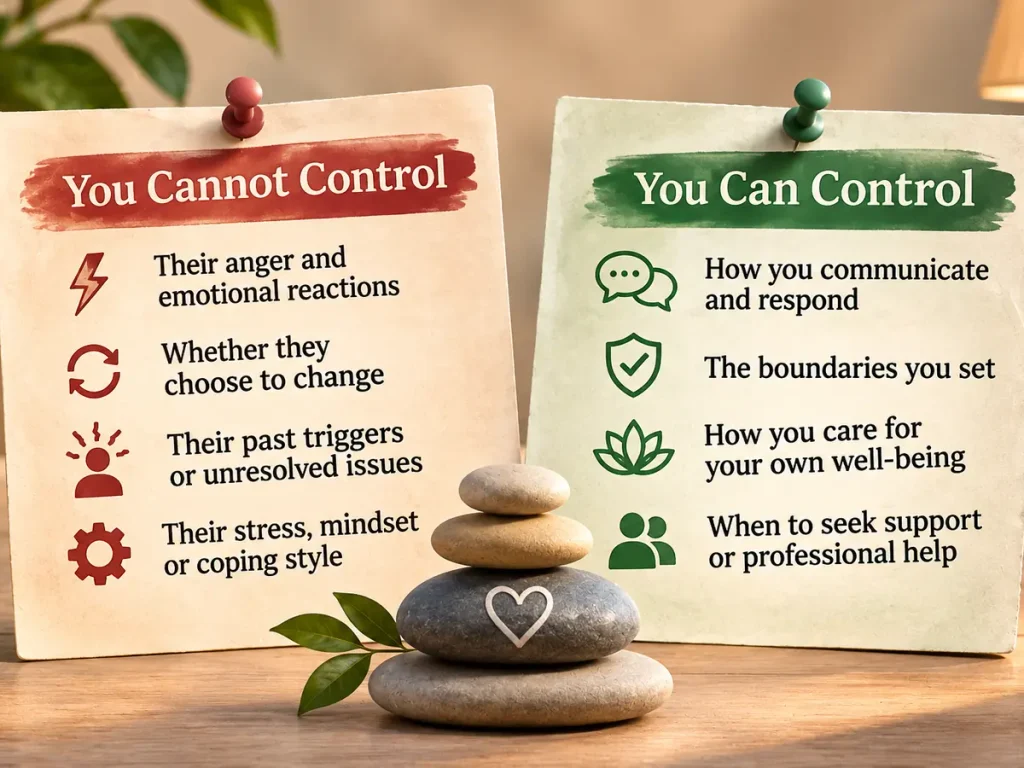
However, understanding the reasons behind someone’s behaviour does not mean that you must accept everything they do. Your partner may be struggling with something internally, but your emotional well-being matters too.
To understand this pattern, it is helpful to look at the psychology behind persistent anger and negativity, how these behaviours affect the other partner, why couples sometimes become trapped in recurring conflict and what can realistically be done to improve the situation.
Why Is My Partner Always Angry? Psychological Explanations
When your partner seems irritated, frustrated or angry most of the time, it is natural to look for a reason. You may wonder whether something is wrong in the relationship, whether your partner is unhappy with life or whether you are unknowingly doing something that upsets them.
The truth is that persistent anger can have several underlying causes. Understanding these possibilities can help you look beyond the arguments and recognise what might be happening beneath the surface. These are possible explanations, not diagnoses, and none of them makes hurtful behaviour acceptable.
Chronic Stress and Accumulated Frustration
Sometimes, anger in a relationship is not really about the relationship alone. Your partner may be carrying pressure from work, financial responsibilities, family expectations, health concerns or unresolved personal difficulties. When stress continues without enough time or healthy ways to recover, even ordinary situations can begin to feel overwhelming.
For example, imagine your partner has been dealing with demanding workdays for several weeks. They return home already tense, and a small inconvenience—an untidy room, a delayed meal or a simple question—triggers an irritated response. The immediate situation may be minor, but the emotional pressure behind it is much larger.
This can help explain why someone becomes unusually short-tempered during a difficult phase. However, stress may explain the reaction; it does not excuse repeatedly directing frustration at a partner. Recognising the pressure is useful, but learning to manage it without hurting someone else remains that person’s responsibility.
Difficulty Regulating Emotions
Not everyone has learned how to recognise, express and manage difficult emotions. Some people experience frustration intensely but struggle to pause before reacting. Instead of saying, “I feel overwhelmed” or “Something is bothering me,” they may raise their voice, become critical, blame others or turn a disagreement into an argument.
This is sometimes connected to difficulties with emotion regulation—the ability to understand an emotional response and manage how it is expressed.
A 2025 meta-analysis published in Scientific Reports examined 81 studies involving anger and emotion-regulation strategies. It found associations between anger and strategies such as rumination, avoidance and suppression. The researchers also reported substantial variation across the studies, so these findings describe broader patterns rather than explaining every individual’s behaviour. You can read the research on anger and emotion-regulation strategies.
Consider a partner who becomes angry whenever plans change unexpectedly. The change itself may not be serious, but their difficulty tolerating frustration can make the reaction disproportionate. They may calm down later and even regret what they said, yet find themselves repeating the same response the next time something goes wrong.
Feeling anger is a normal human experience. Repeatedly expressing it through insults, intimidation or blame is a behaviour that needs to change.
Unresolved Resentment and Unmet Relationship Needs
Sometimes, recurring anger is connected to concerns that have never been properly discussed or resolved. Your partner may feel unheard, unappreciated, unsupported or disappointed about something in the relationship. Rather than communicating these feelings directly, they may express them through irritation, sarcasm, criticism or frequent complaints.
For instance, one partner may feel that household responsibilities are unfairly shared. Instead of discussing the imbalance, they become irritated whenever another household task is left unfinished. What appears to be anger about a small domestic issue may actually reflect a longer-standing feeling of being taken for granted.
This does not mean that every angry reaction hides an unmet need. Nor does it mean that you are responsible for discovering and resolving every concern your partner has. Both people need opportunities to express dissatisfaction honestly, listen to one another and take responsibility for resolving relationship problems.
When resentment remains unspoken, small disagreements can become reminders of much larger disappointments.
Negative Interpretations and Habitual Patterns of Thinking
Some people tend to interpret everyday situations through a negative lens. They may quickly notice what has gone wrong, expect disappointment or assume that another person’s behaviour has a hurtful intention.
For example, if you come home late, your partner might interpret it as a sign that you do not value their time. If you disagree with an opinion, they may experience it as personal rejection. A simple request for clarification may be understood as criticism.
In psychology, the way we interpret an event influences how we feel and respond to it. Two people can experience the same situation but attach very different meanings to it. When someone repeatedly makes negative assumptions without checking the facts, frustration and conflict can build even when the original situation was relatively ordinary.
These interpretations may be influenced by past experiences, learned family communication patterns, insecurity or habitual pessimism. The difficulty is not simply that your partner notices problems; it is that negative assumptions may leave little room for curiosity, reassurance or a more balanced explanation.
Insecurity and Fear of Rejection
Anger can sometimes appear when a person feels emotionally threatened, insecure or afraid of losing closeness in a relationship. For example, a partner who worries about rejection may become unusually upset when you need personal space, spend time with friends or disagree with them.
They might interpret ordinary independence as a sign that you are losing interest. Instead of expressing the underlying fear—perhaps, “I am worried that we are becoming distant”—they may respond with accusations, repeated questioning, jealousy or anger.
Research on adult attachment helps explain why people can respond differently to stress within close relationships. A 2022 review in Nature Reviews Psychology describes how attachment anxiety and avoidance can influence people’s thoughts, emotions and behaviour in stressful relationship situations. The review, Buffering and spillover of adult attachment insecurity in couple and family relationships, provides a useful overview.
However, attachment insecurity is not a diagnosis, and it should not be used to label a partner based on a few disagreements. Nor does fear of rejection justify controlling behaviour, excessive suspicion or restricting another person’s independence.
Mental Health, Physical Health and Lifestyle Factors
Persistent irritability may sometimes be associated with a person’s mental or physical health. Depression, anxiety, prolonged sleep difficulties, chronic pain, substance use and other health-related concerns can affect mood, patience and the ability to cope with everyday stress.
Depression, for example, does not always appear as visible sadness. The US National Institute of Mental Health’s information on depression lists increased anger or irritability, restlessness, withdrawal and negative thinking among possible changes in mood or behaviour associated with depression.
Imagine a person who has gradually stopped enjoying activities, sleeps poorly, feels exhausted and becomes irritated over situations they previously handled calmly. Their partner may experience the behaviour as constant negativity, while the person themselves may not recognise that their overall mental health has changed.
Physical discomfort can also affect emotional tolerance. Someone dealing with persistent pain or inadequate sleep may have less patience and find it harder to manage frustration. If irritability is a noticeable change from someone’s usual behaviour, particularly when accompanied by other symptoms or difficulties in daily functioning, a conversation with a qualified health professional may be helpful.
It is important not to assume that an angry partner has depression, anxiety or another condition. Anger alone cannot establish a diagnosis. A proper assessment considers the wider pattern of symptoms, personal history and circumstances.
Why Does My Partner Always Focus on the Negative?
Have you ever tried sharing something positive with your partner, only to find the conversation turning towards a problem? Perhaps you talk about a good day at work, a family celebration or a plan for the weekend, but your partner quickly points out what might go wrong. Even when things are going reasonably well, they seem to find something to complain about.
There are several psychological patterns that may help explain this behaviour.
The Negativity Bias: Why Problems Receive More Attention
The human mind can give greater attention and importance to negative information than to positive or neutral information. This tendency is often described as the negativity bias.
For example, your partner may receive appreciation from colleagues but remain preoccupied with one critical comment. A family gathering may go smoothly, yet they may spend the evening discussing one uncomfortable interaction. Gradually, conversations can become dominated by problems rather than positive experiences.
Research has examined this tendency in attention, memory and social judgement, although its strength and expression can vary across situations and individuals. A useful overview is Catherine J. Norris’s review, The Negativity Bias, Revisited. Negativity bias is a general psychological tendency, not a disorder or an explanation for every negative behaviour.
Rumination: When the Mind Keeps Returning to Problems
Some people find it difficult to mentally move on from disappointing experiences. They repeatedly think about an argument, an unfair comment, a past mistake or something that did not happen as expected. This repetitive pattern of thinking is known as rumination.
A person who ruminates may revisit the same complaint several times, even after the immediate issue has been discussed. Something that happened days or weeks ago may suddenly return during an unrelated conversation.
Rumination can prolong negative emotions and make ordinary relationship challenges feel more overwhelming. Instead of finding a way to address a concern, the person may become increasingly absorbed in what went wrong.
Pessimistic Expectations: Always Anticipating What Might Go Wrong
Another possibility is a habitual expectation that situations will end badly. Your partner may worry about future problems, anticipate disappointment or struggle to trust that things will work out.
For instance, you may suggest a holiday, but your partner immediately focuses on the expense, possible delays, travel difficulties or things that might go wrong. You may be trying to enjoy the possibility, while they are already preparing for disappointment.
Sometimes, this outlook develops through repeated stressful experiences, family environments where criticism was common or a strong fear of uncertainty. In other cases, it may be associated with anxiety or low mood.
Being realistic about difficulties is not the same as being persistently pessimistic. The difference lies in whether a person can consider possible solutions and acknowledge positive possibilities alongside genuine concerns.
Learned Communication Patterns: When Complaining Becomes Normal
People also learn how to communicate by observing the relationships and family environments in which they grow up. If someone has spent years around frequent criticism, blaming, sarcasm or arguments, these patterns may gradually become familiar ways of expressing dissatisfaction.
They may not even recognise how often they complain or how their words affect the people around them. What feels like normal communication to one person may feel emotionally draining to their partner.
This does not mean that childhood experiences determine someone’s behaviour permanently. People can recognise learned patterns, develop healthier communication skills and choose different ways of responding.
When Negativity Becomes a Relationship Pattern
Occasional complaints and difficult days are part of ordinary life. A concern arises when nearly every conversation becomes focused on problems, when positive experiences are repeatedly dismissed or when attempts to discuss solutions turn into criticism.
Over time, the other partner may stop sharing good news, avoid discussing plans or hesitate before expressing an opinion because they expect a negative response. The relationship can gradually begin to feel like a place where problems are discussed constantly but rarely resolved.
It is also important to distinguish habitual negativity from deliberate humiliation, intimidation or controlling behaviour. These are not simply differences in outlook; they may indicate a more harmful relationship pattern.
How Does Living With an Angry and Negative Partner Affect You Emotionally?
When your partner is frequently angry, irritated or negative, the impact may extend far beyond the arguments themselves. At first, you might try to remain patient, avoid unnecessary disagreements or reassure yourself that things will improve. But when the same behaviour continues, it can gradually influence how you think, feel and behave within the relationship.
You may begin changing your responses, adjusting your expectations and even questioning your own feelings simply to maintain a peaceful atmosphere. Without realising it, you may start carrying the emotional weight of a relationship in which you are constantly trying to prevent the next disagreement.
Emotional Exhaustion From Constant Tension
Living with recurring anger can be emotionally draining. Even when there is no active disagreement, you may feel that the atmosphere is tense or that another argument could begin at any moment.
You might find yourself thinking about how your partner will react before discussing an ordinary matter. A simple conversation about household responsibilities, family plans or daily decisions may require more emotional effort than it should.
Over time, this constant adjustment can leave you feeling tired, frustrated and less interested in communicating. You may still care deeply about your partner, but the relationship begins to feel more exhausting than comforting.
Anticipatory Anxiety: Always Preparing for the Next Reaction
One of the more difficult consequences is beginning to anticipate your partner’s anger before it actually happens. You may become unusually attentive to their facial expressions, tone of voice, silence or changes in mood.
For example, when your partner returns home, you may immediately try to understand whether they seem irritated. If they answer briefly or appear unusually quiet, you might start wondering whether something is wrong or whether you have unknowingly upset them.
This is a form of anticipatory anxiety: emotional distress connected to the expectation that something unpleasant may happen. It does not necessarily mean that you have an anxiety disorder. It describes a response that can develop when interactions repeatedly feel unpredictable or tense.
When this becomes a regular experience, it can become difficult to relax and feel comfortable in your own relationship.
Self-Censorship: You Gradually Stop Expressing Yourself
You may begin avoiding certain subjects because you know they could lead to an argument. Perhaps you stop discussing financial concerns, expressing disagreement or sharing something that has upset you.
Initially, this may seem like a practical way to avoid unnecessary conflict. But gradually, you may find yourself withholding thoughts and feelings that are important to you.
For example, you may disagree with a decision but remain silent because you do not want another prolonged argument. You may accept something that makes you uncomfortable simply because explaining your position feels emotionally exhausting.
The difficulty is that avoiding every disagreement does not necessarily create a healthier relationship. It may reduce immediate tension, but it can also prevent honest communication and leave important concerns unresolved.
Self-Doubt and Questioning Your Own Behaviour
Repeated criticism, blame and negative reactions can sometimes make you question yourself. You may begin wondering whether you are too sensitive, whether you make too many mistakes or whether you are somehow responsible for your partner’s anger.
This can happen particularly when ordinary disagreements repeatedly turn into conversations about your shortcomings.
For instance, you raise a concern about something that hurt you, but the discussion quickly shifts towards what you supposedly did wrong. Eventually, you may stop trusting your own interpretation of situations and spend more time defending yourself than expressing how you feel.
It is important to remember that being imperfect in a relationship does not make you responsible for another adult’s repeated anger. Both partners can make mistakes, but each person remains responsible for how they communicate and respond.
Emotional Withdrawal and Loss of Closeness
When conversations repeatedly lead to criticism or conflict, emotional distance may gradually develop. You may stop sharing personal experiences, discussing your worries or looking forward to spending meaningful time together.
Sometimes, withdrawal happens because you no longer expect a supportive response. At other times, it becomes a way to protect yourself from further disappointment.
Your partner may interpret this distance as a lack of interest or affection, while you may experience it as a consequence of feeling repeatedly unheard. The relationship can become less emotionally connected even when both people continue living together and managing everyday responsibilities.

Losing Sight of Your Own Emotional Needs
Perhaps the most subtle change occurs when you become so focused on managing your partner’s mood that you begin neglecting your own well-being.
You may spend considerable time trying to understand what is upsetting them, finding ways to avoid their triggers or thinking about how to make things better. Meanwhile, your own need for respect, reassurance, companionship and emotional support may receive very little attention.
Gradually, the relationship can become organised around one person’s emotional reactions rather than the needs of both partners.
Understanding your partner’s difficulties is important, but a healthy relationship cannot depend on one person constantly adjusting while the other avoids responsibility for change.
When Should You Pay Attention to These Changes?
Not every disagreement or stressful phase will produce these effects. Relationships naturally experience periods of tension, and both partners may sometimes need time, patience and understanding.
However, if you regularly feel anxious before conversations, suppress your opinions, question your self-worth or withdraw from people and activities you once enjoyed, it is worth taking these changes seriously. They may indicate that the relationship dynamic is affecting your emotional well-being.
If you feel frightened, controlled, humiliated or threatened, do not treat the situation as an ordinary communication problem. Your safety and access to confidential support matter.
If you recognise yourself in these experiences, you may also find it helpful to read Why Do I Feel Emotionally Unsafe? The Hidden Psychology of Emotional Safety. That article explores how a persistent sense of unease can influence trust, communication and the way we experience close relationships.
The Negative Cycle Couples Become Trapped In
Sometimes, the most exhausting part of living with an angry or negative partner is not any single argument. It is the feeling that the same conflict keeps returning, even after both of you have tried to move past it.
One disagreement leads to another. A conversation that begins with a small concern becomes an argument. One person becomes defensive, the other withdraws, and neither feels properly understood. Eventually, the immediate tension settles, but the underlying issue remains unresolved.
Psychologists and relationship researchers have studied similar patterns of interaction in couples. One well-known concept is the demand-withdraw pattern, in which one partner repeatedly pushes for discussion, change or reassurance while the other avoids, disengages or becomes less responsive.
A meta-analysis by Schrodt, Witt and Shimkowski (2014), covering 74 studies and 14,255 participants, found a meaningful association between demand-withdraw patterns and individual, relational and communication outcomes. These findings describe an association, not proof that this pattern alone causes relationship difficulties. You can read the 2014 meta-analysis of the demand-withdraw pattern.
How the Cycle Develops
Consider a familiar situation. Your partner comes home irritated and complains about something you have not done. You feel criticised and try to explain yourself. Your partner interprets your explanation as an excuse and becomes angrier. You eventually stop responding because you do not want the argument to continue.
But your silence may be interpreted as indifference or avoidance. Your partner becomes more frustrated, raises the issue again or makes further accusations. You feel increasingly misunderstood and withdraw even more.
The same pattern may repeat during the next disagreement.
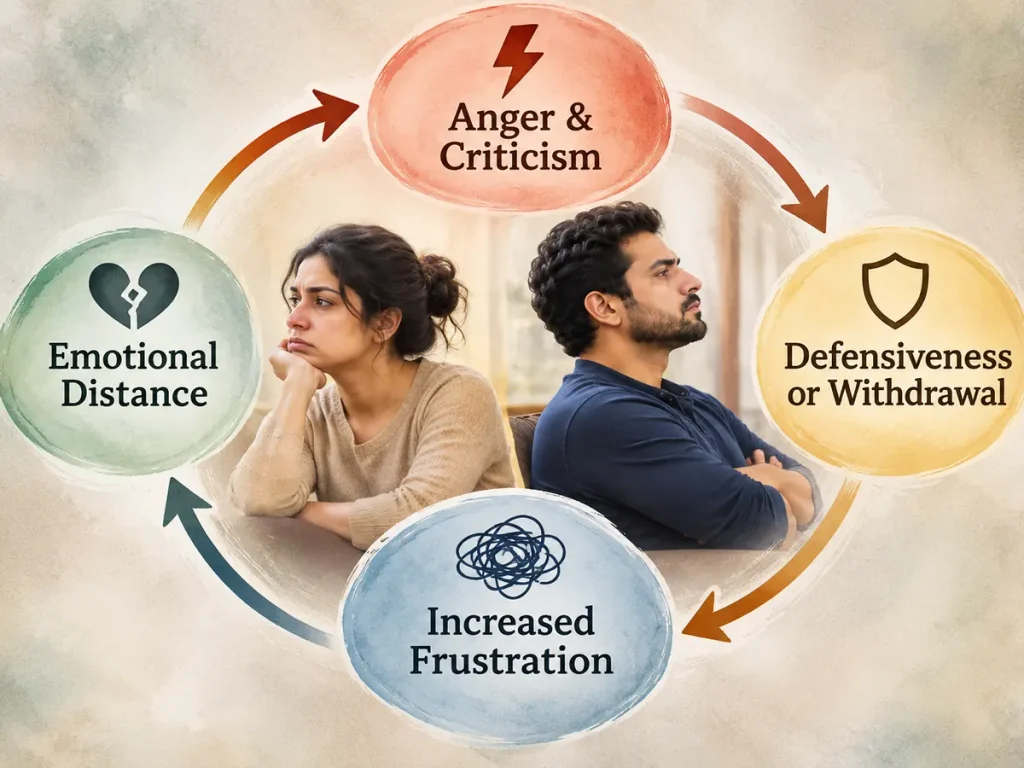
The recurring negative cycle:
- Anger or criticism: One partner expresses frustration through complaints, blame or an irritated response.
- Defensiveness or withdrawal: The other partner tries to justify themselves, becomes defensive or stops engaging.
- Increased frustration: The first partner feels ignored or misunderstood and pushes harder for a response.
- Emotional distance: Both partners feel unheard. The original concern remains unresolved, creating the conditions for another argument.
This is an illustrative relationship pattern, not a diagnostic or validated assessment tool.
Why Does This Pattern Become So Difficult to Break?
One reason is that each partner may focus on the other’s reaction rather than recognising the interaction pattern itself.
The angry partner may think, “I become frustrated because you never listen.” The withdrawing partner may think, “I stop talking because you always get angry.” Both may feel that their response is justified by the other person’s behaviour.
As this continues, the original concern gets lost. Instead of discussing what needs to change, the couple becomes caught in repeated arguments about how each person communicates.
There is also an important distinction to remember: not every recurring conflict is a shared communication problem. In relationships involving intimidation, coercive control, threats or abuse, one partner’s withdrawal may be an attempt to stay safe. It would be misleading to suggest that both partners are equally responsible for that situation.
Breaking the Cycle Requires More Than Avoiding Arguments
For couples experiencing ordinary recurring conflict, improvement begins when both partners recognise the pattern and take responsibility for changing their own responses.
The angry partner needs to learn to express frustration without insults, blame or intimidation. The withdrawing partner may need to communicate when they require a pause rather than disappearing from the conversation indefinitely. Both need to return to unresolved concerns when they are calmer and genuinely willing to listen.
A temporary break during an intense disagreement can help, provided it is communicated clearly and followed by a genuine attempt to resume the discussion. Silence used to punish, control or frighten someone is different from taking time to regulate emotions.
Ultimately, a healthy relationship does not require two people to agree on everything. It requires the ability to disagree without repeatedly hurting one another.
How to Deal With an Angry and Negative Partner Without Losing Yourself
Living with a partner who is frequently angry or negative can leave you feeling helpless. You may have tried explaining your feelings, avoiding arguments or adjusting your behaviour, yet the same difficulties keep returning.
The challenge is to respond in a way that protects your emotional well-being without turning every disagreement into another conflict. You cannot control your partner’s reactions, but you can make thoughtful choices about how you communicate, what behaviour you accept and what support you need.
Here are seven practical approaches that may help.
Choose the Right Moment to Discuss Difficult Issues
Trying to resolve a disagreement while your partner is already angry rarely leads to a productive conversation. When emotions are intense, people may become defensive, interrupt one another or say things they later regret.
Instead, wait until both of you are relatively calm. You might say, “I want us to discuss what happened, but I think we will understand each other better when we are both calmer.”
This is not about avoiding difficult conversations. It is about choosing a moment when both people have a better chance of listening and responding thoughtfully.
Talk About Specific Behaviour Rather Than Attacking Personality
Telling your partner that they are always angry, negative or impossible to please may make them feel personally attacked. They may focus on defending themselves rather than understanding your concern.
Try describing the behaviour and its impact instead.
For example:
- Instead of saying, “You are always in a bad mood,” say, “I’ve noticed that our conversations have become tense quite often, and I find it difficult to talk openly.”
- Instead of saying, “You never listen to me,” say, “When I am interrupted, I feel that my concerns are not being heard.”
Specific language makes the issue clearer and gives both partners something concrete to discuss. It does not guarantee a positive response, but it can reduce unnecessary blame.
Listen to Your Partner Without Accepting Disrespect
Sometimes anger is connected to genuine frustration, disappointment or an unmet need. Giving your partner an opportunity to explain what is bothering them can help uncover concerns that have not been properly discussed.
You might ask, “Is something bothering you that we haven’t talked about?” or “What would help us handle this situation differently?”
However, listening does not mean agreeing with every accusation or accepting hurtful behaviour. You can acknowledge someone’s feelings while still disagreeing with how they express them.
For example, you might say, “I understand that you are frustrated, and I am willing to discuss the problem. But I don’t think shouting at each other will help us resolve it.”
Set Clear and Respectful Boundaries
One of the most important steps is deciding what kind of communication you are willing to participate in.
A boundary is not a threat or an attempt to control your partner. It is a clear statement about how you will respond when a particular behaviour occurs.
For example:
- “I am willing to discuss this, but not while we are shouting.”
- “Please don’t insult me when we disagree.”
- “If the conversation becomes disrespectful, I will take a break and return to it when we are calmer.”
A boundary becomes meaningful when you follow through consistently. You are not demanding that your partner never feel angry; you are making it clear that anger does not justify disrespect.
If setting a boundary could put you at risk of retaliation or violence, do not feel obliged to confront your partner. Prioritise your safety and seek confidential support.
Encourage Shared Problem-Solving and Accountability
A relationship cannot improve if only one person is trying to change the situation. Both partners need to recognise their contribution to recurring difficulties and be willing to do something differently.
Instead of repeatedly discussing who is right or wrong, try focusing on the issue that needs attention.
For instance, if arguments frequently arise over household responsibilities, discuss how tasks can be divided more fairly. If misunderstandings are common, agree to ask questions before making assumptions about each other’s intentions.
It is equally important for your partner to acknowledge the impact of their behaviour. An apology matters, but meaningful improvement also involves taking responsibility and making a consistent effort to behave differently.
Protect Your Own Emotional Well-Being
When much of your attention goes towards managing your partner’s mood, your own needs can gradually become less important.
Make time for activities, friendships and interests that help you maintain a sense of identity outside the relationship. Continue talking to people you trust rather than isolating yourself because you feel embarrassed or uncertain about what is happening.
You can also practise recognising your own emotional limits. If repeated arguments leave you exhausted, allow yourself time to recover rather than feeling compelled to resolve every disagreement immediately.
Looking after yourself is not selfish. It helps you maintain perspective and make decisions based on your needs rather than reacting constantly to someone else’s mood.
Consider Professional Support When the Pattern Continues
Sometimes, repeated anger and negativity are connected to deeper relationship difficulties or individual emotional struggles that are difficult to address without support.
Individual counselling may help your partner understand their emotional responses, recognise unhelpful thinking patterns and develop healthier ways of communicating. You may also benefit from individual counselling to process the emotional impact of the relationship and clarify your boundaries.
Couples counselling can be helpful when both partners voluntarily participate, feel safe to speak honestly and are willing to take responsibility for their behaviour.
However, where there is intimidation, coercive control, threats or abuse, couples counselling may not be appropriate. Individual, confidential support and safety planning should take priority.
Remember: You Can Support Your Partner Without Sacrificing Yourself
It is natural to want to understand someone you love, particularly when you believe their anger may come from stress, insecurity or unresolved difficulties. Patience and empathy can create opportunities for positive change, but they cannot replace your partner’s willingness to take responsibility.
You do not have to become increasingly silent, adjust every aspect of your life or accept repeated criticism just to keep the relationship peaceful. A healthy relationship should allow both people to express their feelings, disagree respectfully and feel valued.
The goal is not to learn how to tolerate endless anger. It is to understand whether both partners are willing and able to build a healthier way of relating to each other.
When Does Your Partner’s Anger Become Emotional Abuse?
Not every angry reaction, disagreement or negative comment is a sign of emotional abuse. People sometimes lose patience, communicate poorly or say things they later regret. In a healthy relationship, however, both partners can acknowledge their mistakes, apologise sincerely and make an effort to change.
The concern becomes more serious when anger is repeatedly used to humiliate, frighten, control or undermine the other person. In such situations, the issue is no longer simply about managing a difficult temperament. It may be part of a pattern of emotional abuse.
7 Warning Signs You Should Not Ignore
Consider whether your partner repeatedly:
1. Humiliates or belittles you: Makes insulting remarks about your intelligence, appearance, abilities or worth, either privately or in front of others.
2. Uses anger to intimidate you: Shouts, threatens, behaves aggressively or creates an atmosphere in which you feel frightened to disagree.
3. Blames you for everything: Makes you feel responsible for their anger, behaviour or unhappiness, even when you have not done anything wrong.
4. Controls your choices: Tries to dictate whom you meet, where you go, what you wear or how you spend your money.
5. Isolates you from others: Discourages or prevents you from maintaining relationships with family, friends or people who could support you.
6. Repeatedly dismisses your feelings: Mocks your concerns, calls you overly sensitive or makes you feel that your emotional experiences do not matter.
7. Uses threats or punishment to control you: Threatens to harm you, your loved ones or your reputation, or uses intimidation and punitive behaviour to make you comply. Threats of self-harm should always be taken seriously and handled with appropriate professional support rather than dismissed or managed alone.
One incident may need attention, but the wider pattern is particularly important. Look at whether these behaviours repeatedly restrict your freedom, undermine your confidence or make you afraid of expressing yourself.
Conflict and Emotional Abuse Are Not the Same
A useful distinction is the difference between disagreement and control.
In ordinary relationship conflict, both people can express different opinions, question each other’s behaviour and discuss problems without fear. Even when arguments become uncomfortable, there is generally room for accountability, mutual respect and repair.
In an emotionally abusive relationship, one person may repeatedly use fear, humiliation, threats or control to gain power over the other. The other partner may gradually begin changing their behaviour to avoid punishment or intimidation.
The World Health Organization’s information on violence against women recognises psychological abuse and controlling behaviours within its description of intimate partner violence. This is an important reminder that repeated intimidation and control should not be dismissed as simply a difficult personality or communication style.
When Should You Seek Help?
If you recognise these patterns in your relationship, consider speaking confidentially with a qualified counsellor, mental health professional or domestic violence support service. You do not need to wait until the situation becomes physically violent before seeking help.
If you feel unsafe, prioritise your immediate safety. Reach out to someone you trust, consider a safety plan and seek local emergency assistance if you face an immediate threat. If you are concerned that your partner monitors your phone or online activity, use a safer device when seeking support.
Couples counselling is not always appropriate where abuse or coercive control is present. A professional who understands relationship abuse can help you consider safer options. You are not responsible for changing an abusive partner through patience, reassurance or better communication.
Remember: understanding why your partner behaves this way does not require you to accept behaviour that harms you. You deserve respect, dignity and the freedom to express yourself without fear.
If you find that you become unable to respond when your partner raises their voice, you may also find Why Do I Freeze When Someone Raises Their Voice? helpful. It explores why some people become silent or mentally overwhelmed during intense interactions.
Frequently Asked Questions
1. Why Is My Partner Always Angry With Me for No Reason?
Your partner’s anger may be connected to stress, unresolved frustration, difficulty regulating emotions, insecurity or concerns that have not been properly communicated. Sometimes, the immediate situation is not the real source of the frustration.
However, repeated anger should not automatically be attributed to your behaviour. Your partner is responsible for understanding and managing their own emotional responses.
2. Can Living With a Negative Partner Affect Your Mental Health?
Yes. Repeated exposure to criticism, tension and unpredictable reactions can contribute to emotional exhaustion, stress, self-doubt and anticipatory anxiety. You may gradually become hesitant to express your feelings or discuss ordinary matters.
If these experiences are affecting your everyday life, seeking emotional support can help you understand their impact and consider healthier ways forward.
3. Can an Angry Partner Change Their Behaviour?
Yes, change is possible when a person recognises their behaviour, accepts responsibility and consistently works towards improvement. Developing emotional regulation skills, addressing underlying difficulties and learning healthier communication can help.
However, lasting change requires more than occasional apologies or promises. It requires sustained effort and accountability.
4. Should I Stay With a Partner Who Is Always Angry and Negative?
There is no single answer that applies to every relationship. Consider whether your partner acknowledges the problem, respects your boundaries and makes genuine efforts to change. Also consider how the relationship is affecting your emotional well-being and whether you feel safe and respected.
If there is intimidation, coercive control, threats or abuse, prioritise your safety and seek confidential support rather than feeling obligated to preserve the relationship.
Conclusion: Understanding Your Partner Without Losing Yourself
Living with an angry and negative partner can gradually change the way you experience a relationship. You may begin by trying to understand their frustrations, avoid disagreements and maintain peace. But when anger and negativity become recurring patterns, the emotional burden can slowly shift onto you.
Understanding the psychology behind your partner’s behaviour can offer valuable insight. Stress, unresolved resentment, emotional regulation difficulties, insecurity and negative thinking patterns may all contribute to persistent frustration. Yet understanding these influences does not mean accepting repeated criticism, disrespect or intimidation.
A healthy relationship requires more than patience from one person. It needs mutual understanding, emotional responsibility, respectful communication and a willingness to repair what has been hurt.
You can support your partner through difficult times without becoming responsible for every emotion they experience. You can listen without accepting blame for everything. And you can care about the relationship while still recognising your own need for respect and emotional well-being.
Love should give you the space to be yourself, not make you afraid of how another person might react.
Sometimes, the most important step towards a healthier relationship is not learning how to manage someone else’s anger. It is recognising that your feelings, needs and dignity matter too.